
Cleveland Previous Residents Sources
One Cleveland address leaves different kinds of evidence in different periods. Start with the current parcel because it supplies the situs address, owner, parcel or map number, and legal description that can hold the trail together when the street number changes. Then choose the source that matches the period in question. The online deed index is useful for recent and available records, while earlier books, microfilm, archives, and staff assistance remain necessary when the online coverage is not stated.
| Source | Years It Covers | Where Held | What It Shows |
|---|---|---|---|
| Online deed index | Online starting year not stated | TitleSearcher and Register of Deeds | Transfers, instruments, legal descriptions, and available images |
| Deed books and microfilm | Older local years; Bradley cutoff not located | Register, state archives, or library leads | Earlier transfers, plats, and restrictions |
| Directory volumes | Verified leads 1949-1992; later lead to verify | History Branch, state archive, or platform | Address-to-household clues at publication time |
| Newspaper microfilm | 1854-1970 | History Branch | Notices, obituaries, social and property references |
| Obituary index | 1865-present, updated daily | Cleveland Bradley County Library | Death and family leads |
| Sanborn maps | 1925, 1930, 1950 | Library, NPS bibliography, or map lead | Building footprint, lot context, and historic use |
| Federal census | 1850-1950 public; later schedules restricted | National Archives, library, or FamilySearch | Household relationships at enumeration |
| Permit material | County reports for 2024-2025; older depth not exposed | County Planning or Cleveland Building | Construction or alteration dates where released |
A modern parcel can point backward, but it cannot settle every question. Deeds describe legal transfer, maps show a site, and a directory or census can offer a separate clue about a household. Keep the source, date, page, parcel identifier, and exact spelling with each finding.
Cleveland Previous Residents Parcels
Use Tennessee Property Assessment Data to search Bradley County by owner, street address, or parcel identifier. The basic search uses a county and search term, and at least three characters are recommended. Its advanced search can narrow by owner, property address, subdivision, classification, sale dates, parcel parts, and sorting. Copy the owner, situs address, mailing address, parcel or map number, sale information, subdivision, legal description, classification, exemption flags, and visible sketch or image.
The three address keys have different jobs. The situs address identifies the physical parcel. The mailing address shows where tax correspondence goes, which may be a lender, accountant, relative, business, or another address. The legal description identifies the land by lot, block, subdivision, metes and bounds, or a referenced plat. It is the durable key when a historic address does not match a modern number.
Bradley GIS and the Tennessee Property Viewer can help locate the parcel on a map and show property lines, aerial imagery, tax maps, FEMA flood context, voting maps, fire districts, and growth-plan layers. Use the map for geometry and the assessment detail for official assessment fields. A map layer is not a certified boundary survey.
Note: A listed owner or homestead flag can support an inference, but neither proves every person who lived at the address.
Cleveland Previous Residents Deeds
The Bradley County Register of Deeds links TitleSearcher, a vendor gateway for deeds, mortgages, releases, powers of attorney, restrictions, plat maps, and other filed instruments. The visible route requires a login and county selection. It supports name and date-range searching, grantor and grantee cross-references, refer-backs, and document images. The office did not publish Bradley's oldest online year, so older work must not be assumed to be online.
- Find the current parcel in TPAD and save the owner name, legal description, subdivision, lot or block, and available sale information.
- Search the current owner as grantee in the likely purchase period, then locate the deed that transferred the property to that owner.
- Record the seller or grantor, instrument number or deed book and page, execution date, recording date, legal description, and each refer-back.
- Search that seller as grantee for the earlier purchase. Test surname variants, initials, the legal description, plat reference, and a date range when names differ.
- Repeat backward, then ask the Register of Deeds about older deed books, microfilm, certification, image availability, or a staff search when the online trail ends.
- Grantor
- The party transferring an interest in a recorded instrument.
- Grantee
- The party receiving that interest. Searching each seller as an earlier grantee moves a deed trail backward.
- Chain of title
- The sequence of recorded transfers connected by the same land description, not simply by one street number.
- Legal description
- The lot, block, subdivision, metes-and-bounds, or plat reference used to identify land in a deed.
Cleveland Previous Residents Index Gaps
A TitleSearcher result marked “Not Indexed” has not yet been certified or completed in the index. Its grantor, grantee, and property description may therefore be absent. Do not treat that label as proof that no transfer occurred. The vendor describes date searches that can use only a start date or only an end date, which can help when a recording period is uncertain.
Online images may require paid access. The research found a general vendor description of a $5 initial deposit, $2 images, and $0.25 name results, while a Bradley-specific display showed $3 images and $0.25 name results. A monthly schedule was also displayed. Because the schedules differ, confirm the current Bradley charge before ordering. Counter, microfilm, and staff routes are the safer fallback for an older or incomplete online entry.
No authoritative Cleveland street-renaming or citywide readdressing year was found. Compare the courthouse-square map, plats, Sanborn sheets, nearby lots, and historical street spellings rather than forcing an old address into a modern format.
Cleveland Previous Residents Maps
Sanborn maps can anchor a historic address in three known Cleveland years: 1925, 1930, and 1950. They can show a footprint, lot relationship, street name, construction material, and historic use, but they do not name every occupant. Match a map to a dated directory, census, deed, obituary, or permit record. The local historic context also matters because Cleveland developed around the public square, Ocoee Street, Centenary Avenue, rail lines, and industrial corridors.
Explore the Cleveland Library local-history collections for the Craigmiles and Carmichael House context and staff-assisted research.
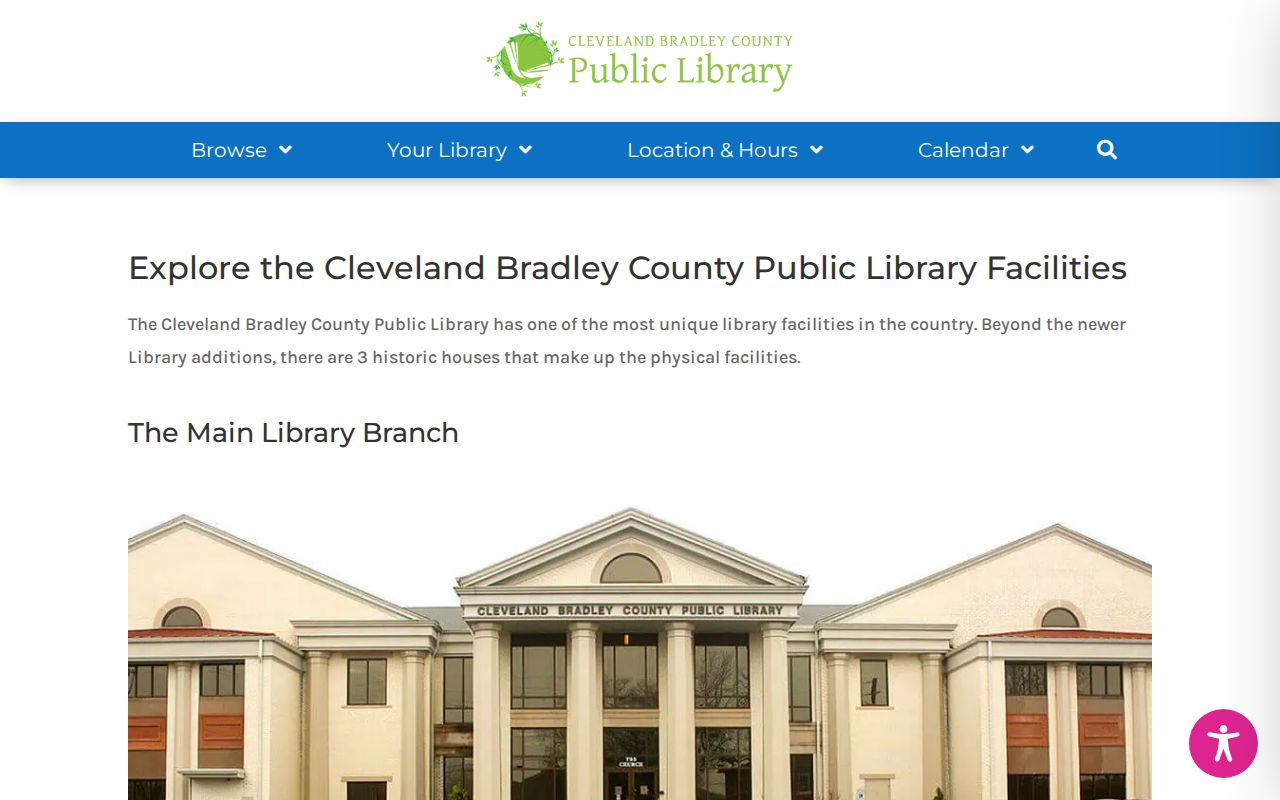
The library provides local-history support rather than a published Cleveland house-history guide. Ask staff for local maps, city or telephone volumes, newspaper microfilm, and any rules for retrieving or copying fragile material.
Cleveland Previous Residents Directories
Historical volumes are the household layer of an address trail. Search the known address in each accessible street or reverse section, then check the name section for a variation or separate entry. Cleveland leads include 1949, 1952, 1955, 1957, 1959, 1960, 1962, 1964, 1966, and 1990 through 1992, with 1993 through 1999 requiring confirmation. The research did not find an accessible local sample page, so do not assume every volume has a reverse section, an ownership mark, a relationship notation, or a telephone listing.
Use a simple dated flow: address and parcel description, then directory entry, then closest census schedule, then deed or obituary evidence. Write down the print date, census enumeration date, deed execution date, recording date, and newspaper date separately. A person can appear in a volume after moving or disappear before a later census.
The historical shelves and how to read a local entry are covered in more detail on the Cleveland city directory page. This address-focused trail uses those volumes as one source among several.
Note: A directory can suggest occupancy at publication time, while a deed principally records a transfer of land.
Cleveland Previous Residents Census
Federal census schedules can add household relationships that a deed does not contain. The National Archives 72-year rule makes 1950 the latest routinely public census; later schedules remain restricted until the relevant release date. For Cleveland research, combine 1850 through 1950 census names and relationships with a directory date, the legal parcel description, newspaper microfilm, and an obituary notice. Naturalization, military, and county groups may require a state-archives or National Archives search, while the FamilySearch catalog can identify books and microfilm to verify.
Use the National Archives census research page for official census access information.
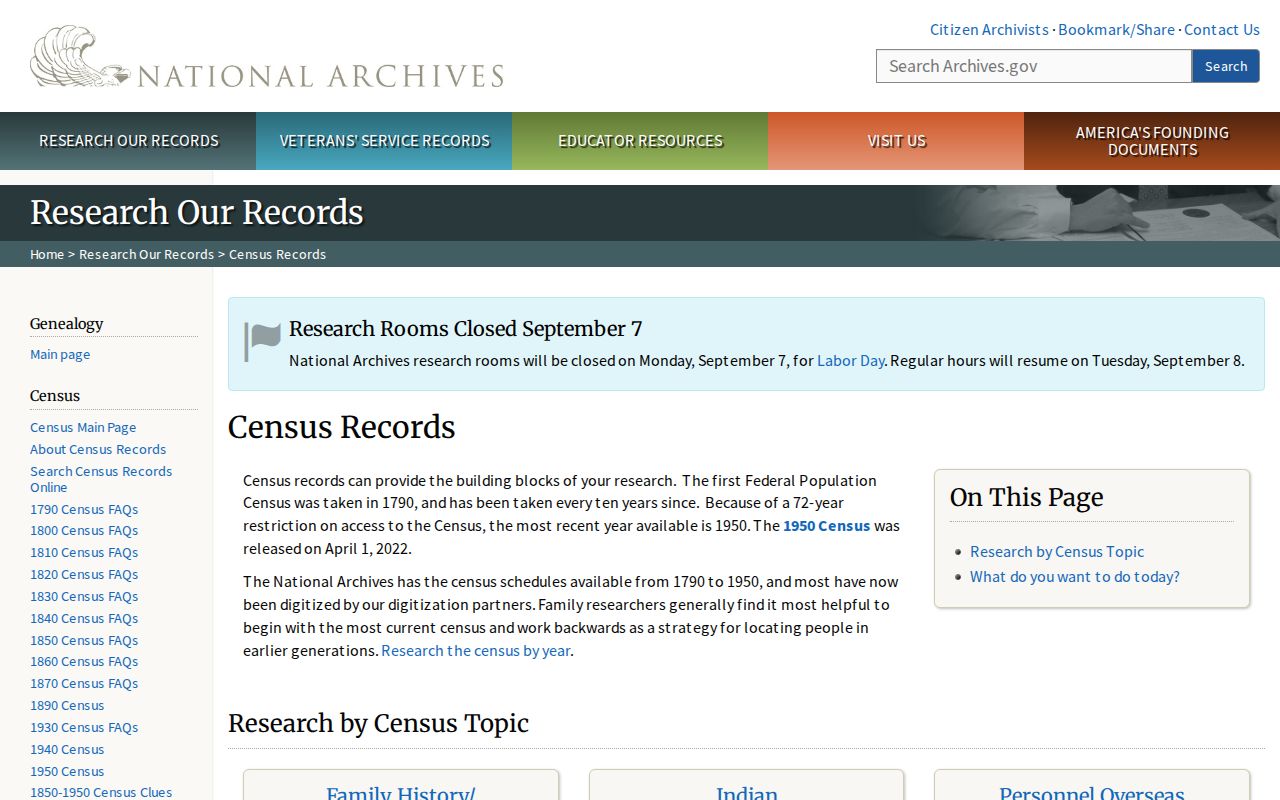
A census is one dated snapshot. It should not override a deed's recording date or a local volume's publication date. Separate dates help explain why two adjacent records show different names at the same address.
Cleveland Previous Residents Obituaries
When an owner or household member disappears from the address trail, the library obituary index can provide a death date and family terms for a probate or deed search. The index reaches back to 1865, is updated daily, and can be searched by first and last name. Results may show first, middle, last, nickname, age, publication date, publication, page number, notes, and an internal ID. The page number can lead back to the microfilm copy.
Search the Cleveland obituary index before requesting a copy.
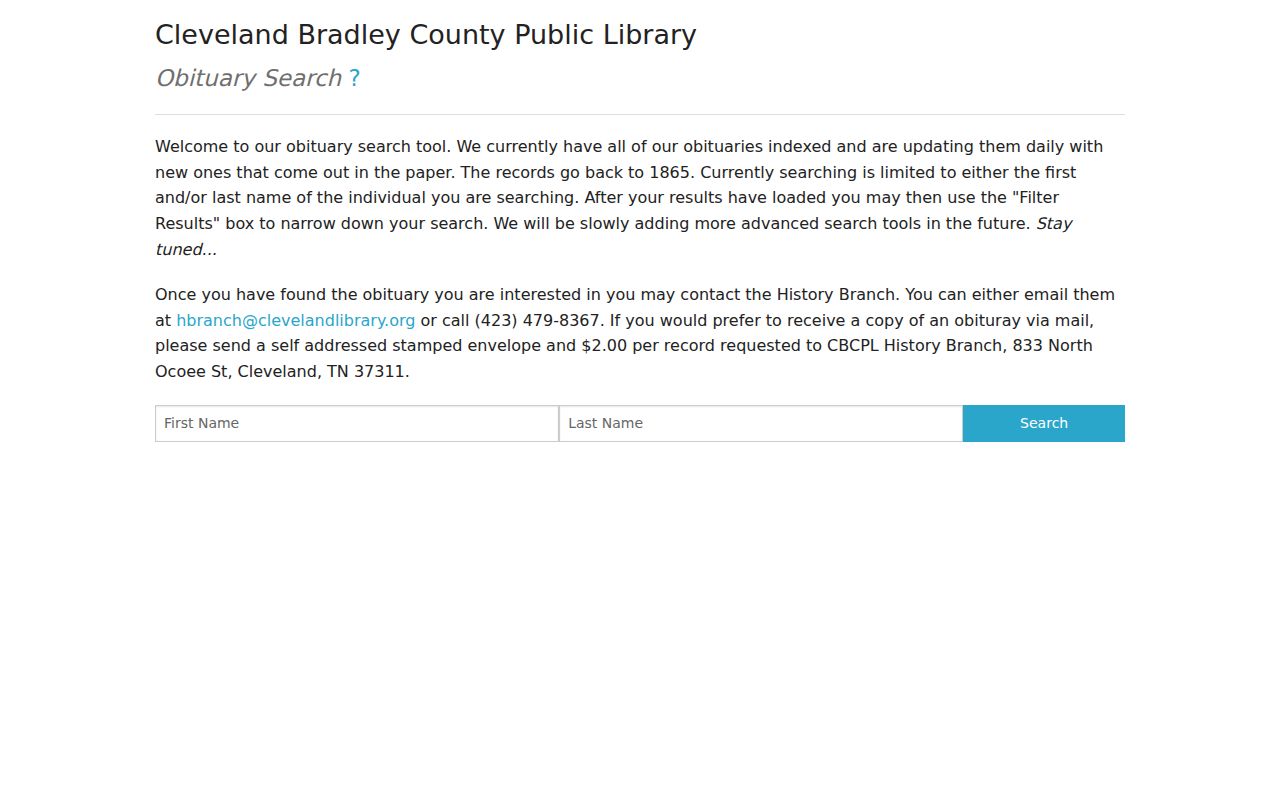
The History Branch reports a $2 obituary-copy charge for mail or email requests, subject to its instructions. Use a decedent's legal name and date when asking the Clerk and Master or Chancery custodian about probate or estate records. Restricted or sealed pages may not be released.
Cleveland Previous Residents Limits
Address research cannot show every household member, guest, utility customer, delivery record, or current phone subscriber. Driver-license address data is closed under the federal DPPA except for permitted uses. The public Tennessee voter lookup is a one-person confirmation form, not a historical street roll, and protected voters or Safe at Home participants can have substituted or withheld addresses. A non-match may reflect a spelling problem, a protected address, incomplete indexing, or a record held only by the local office.
For city permit or code material with no public case search, request the address history from Cleveland or the county with the street address, parcel number, approximate date, and record type. The Cleveland City Clerk accepts inspection and copy requests in person or by email; the form also supports pickup, mail, electronic cloud delivery, a date range, keywords, and a maximum estimate. Inspection is free, while copy and labor rules can apply.